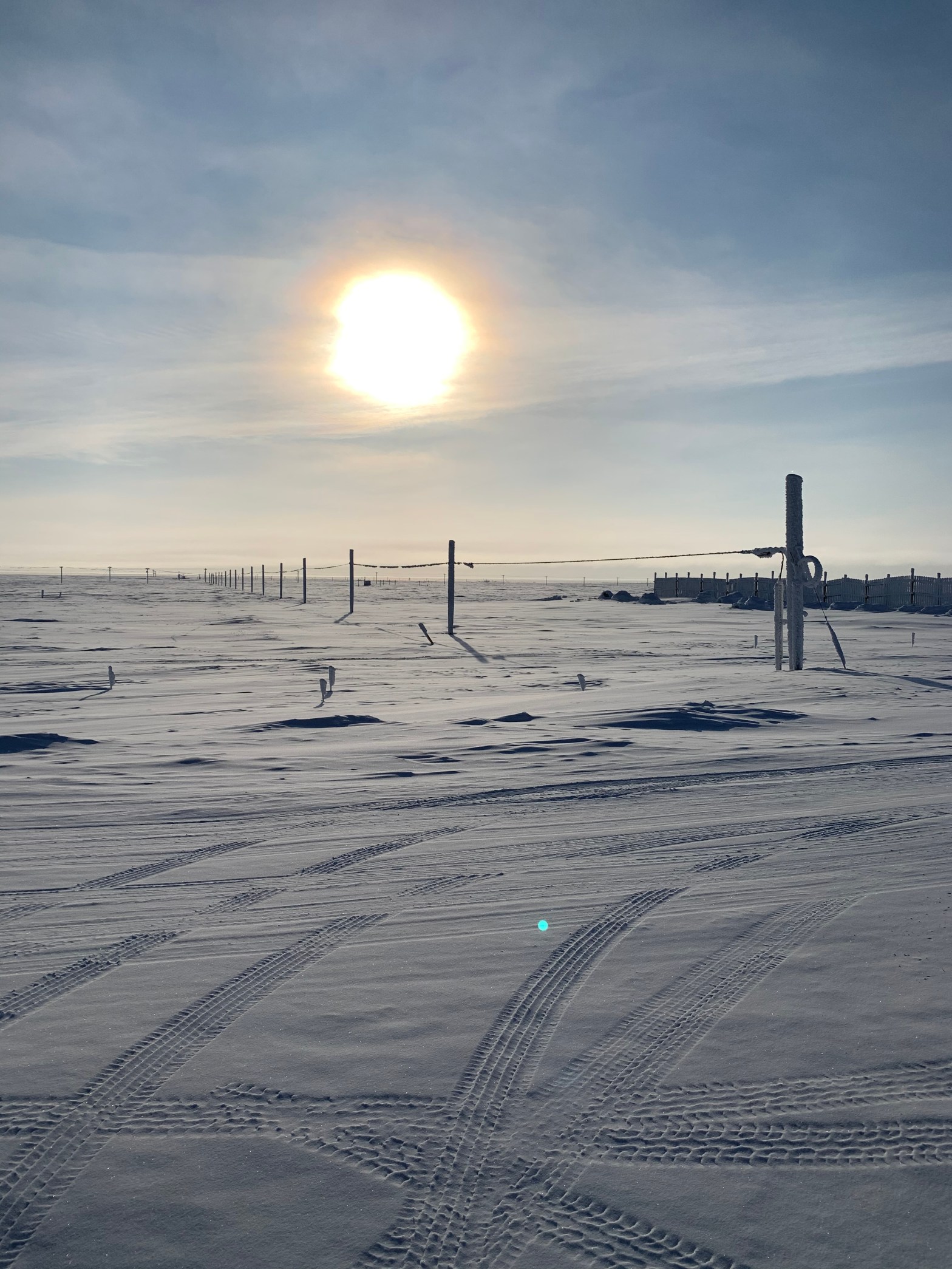
I just got back to the east coast about 23 hours ago after having one of the coolest weeks of my life. From March 6 to March 15, I traveled across the country and stayed in Barrow, Alaska for my geophysics research class. It was absolutely one of the greatest experiences I’ve ever had and I have a lot of different things to share. I will break down my thoughts and feelings during travel and during my stay in Barrow by going through the events of each day of my trip.
Friday, March 6:
On the morning of March 7, I woke up early in preparation for the four hour drive from my home in Radford, VA to Dulles International Airport in Northern Virginia. I had a very long schedule of driving and flying ahead of me – about 30 hours total. My parents and I left our house for Dulles at about 11:00am and stopped for a quick lunch at Chick-Fil-A before hitting the road. The drive itself was relatively uneventful – my parents and I talked about – roughly – how the security process in airports works (this was my first time flying alone, and my first time flying in around 5 years), my thoughts on the trip, and other random things. I remember that during this drive I was excited for the trip, but certainly very nervous as well. I had never traveled alone and nowhere near such a large distance away from home. Sitting around 3,500 miles from Radford, Barrow is by far the greatest distance I’ve ever traveled from home. Before this trip, the furthest west I had gone was Illinois!
After around 4 hours we finally arrived at the airport. Things were about to get pretty hectic for a little while. I walked into the airport and was immediately greeted by the sights and sounds of a lot of people moving from place to place very quickly. I’m not much for crowds, and this places certainly had a lot of that. After some walking around and talking with airport staff, I finally found the Alaska Airlines check-in desk and got my checked bag ready and sent away. Next – and probably the worst part of the airport experience for me – was the journey through probably the longest line I’ve ever seen in my life just to get in line for security. The line moved surprising quickly and I made my way to another line for baggage screening. Although hectic, I eventually made it through and met up with one of my friends, Deanna, who was also going on the trip to Barrow. At this point, we were cutting it close to make our flight’s boarding time, so we rushed to the gate and got on the plane. It was a bit of a jarring experience, but I was relieved and excited to have finally gotten on the plane.
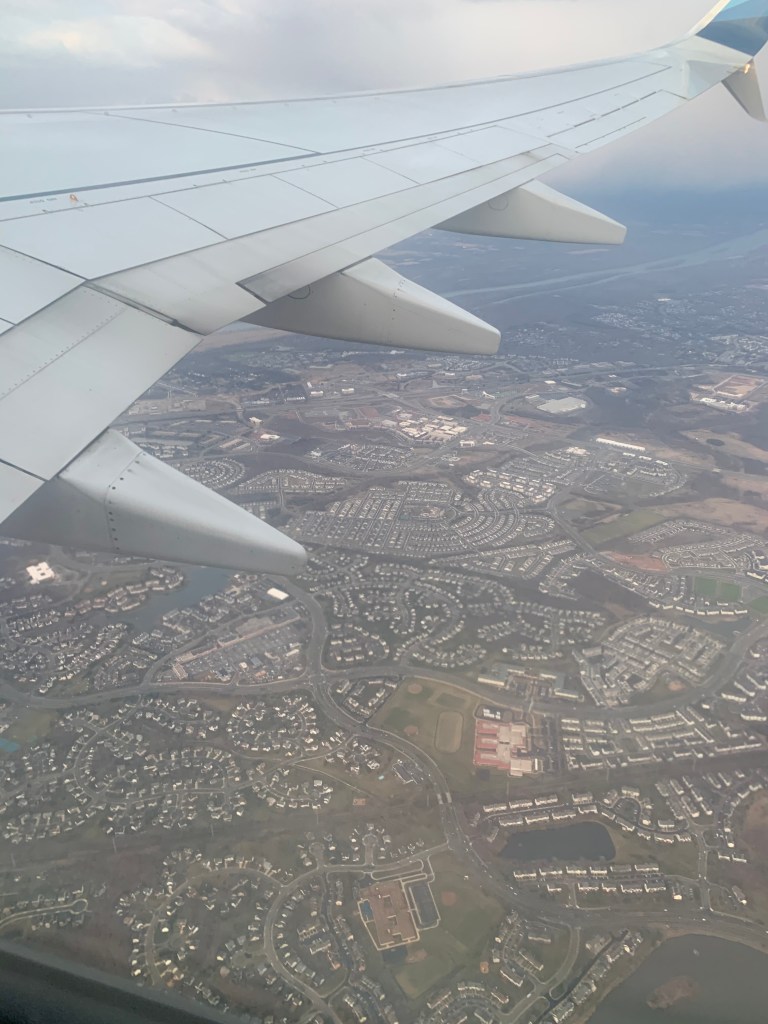
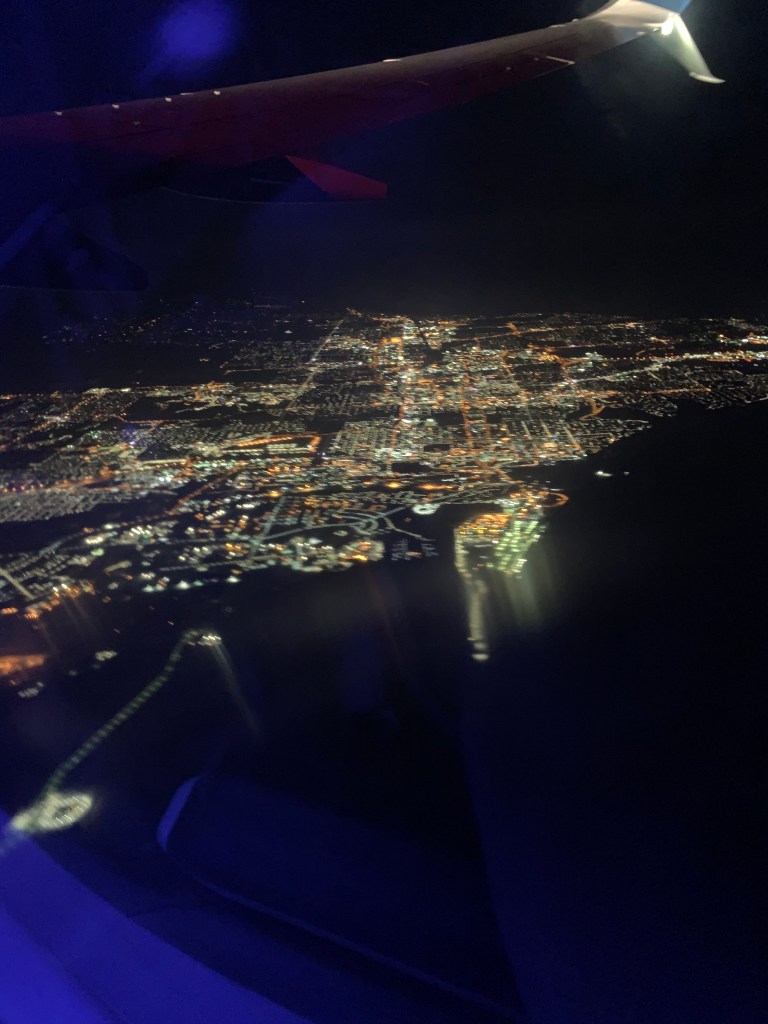
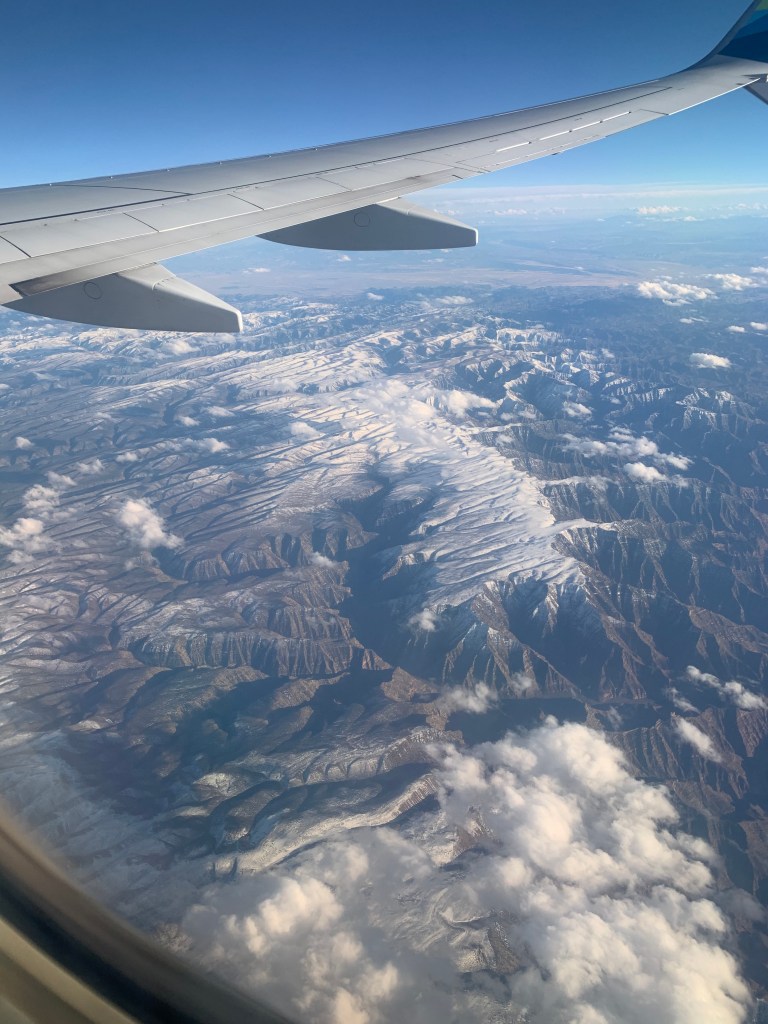
Within about half an hour, the plane took off and I was quickly on my way to Seattle! The plane ride was relatively uneventful. I took some pictures of the sky and marveled at the views seen at 30,000 feet that I hadn’t seen in many years. It was great. I caught up on some TV shows and six hours later we landed in Seattle. My time in Seattle was extremely short as my layover time was less than an hour. I got off the plane in Seattle and rushed to a train that took me to the gate for my flight to Anchorage. Seattle was truly a blur for me and not much happened besides frantically running around towards the gate. I shortly found myself situated in another plane and ready to head to Anchorage. The plane to Anchorage was interesting – I sat right behind two children that screamed nearly the whole flight. I’m not sure much else needs to said about how that flight was. Either way, I did manage to sleep a little while somehow, and I felt good arriving in Anchorage and moving into Saturday.
Saturday, March 7:
The majority of Saturday morning was spent on a layover in the Anchorage airport. Luckily, it was a nice airport, so the 7 hour layover wasn’t all that bad. I left my plane and right in front of me was a McDonald’s. I hadn’t eaten food or had anything substantial to drink for hours, so it was a welcome sight. I met up with two more students that were going on the trip, Annie and Alex, and the four of us (me, Deanna, Annie, and Alex) got McDonald’s and talked about a wide variety of things. Eventually we decided to move towards our gate and start doing a whole lot of nothing for several hours. Some people slept, some people played on their phones, but it all eventually got very dull. I enjoyed the Anchorage airport quite a bit, but that layover wasn’t the greatest. After what seemed like a lifetime, 7:00 am rolled around and we got ready to head towards Prudhoe Bay and then Barrow! We didn’t actually leave the plane between the Prudhoe Bay and Barrow flights, so they’re grouped in my mind as one flight. The flight was uneventful. I was super drained when the flights got started, so I fell asleep for most of them. However, I did start to pay attention once we started approaching Barrow. It was at this time that the reality of the situation hit me. I was going to the northern-most town in the entire United States! I was 3,500 miles from my home! It is definitely a cool experience realizing just how big these distances actually are. It took nearly 12 hours of flying in a plane to get to Barrow. To me, these thoughts made me a bit nervous, but more than anything, very excited. It was a great feeling to finally be done with flying, and an even greater feeling to be in Barrow itself.
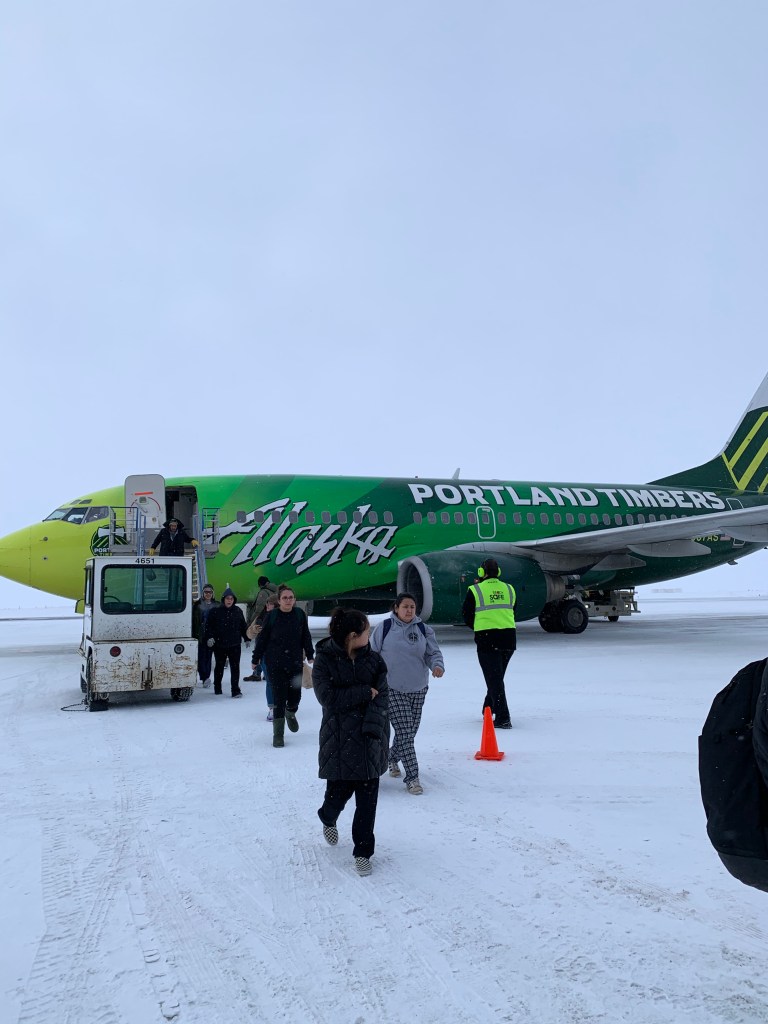
Barrow is quite the place. It is completely unlike any other place I have ever been. The coldest weather I had ever been in previously was about five below on the Fahrenheit scale. Over the course of the week, I would learn that temperatures like that are approaching the “tropical” region – one of the many funny adjectives we used to describe the weather in Barrow. Although my initial experience outside was a short one – a 75 foot walk from the plane to the airport terminal – it was immediately noticeable the sharp difference in temperature from that with which I’m accustomed to in Radford. Once we entered the terminal I was immediately greeted by my professor, Dr. Herman, and an employee of Radford in University Relations, Christina. It was great to see some familiar faces. I was so excited to be there. I’ll probably say this many times throughout the course of this post, but this experience was amazing and exciting at every turn.
After meeting with Dr. Herman and Christina, we gathered our bags and made our way “The Van” – our big (and cold) means of transportation in Barrow. On the way to The Van, I got to experience a little bit more of Barrow’s killer temperatures. At this point in the journey, I don’t think I had any idea truly how cold it would get over the course of the week. We all got situated in The Van and eventually made our way to our “hotel,” the Ukpik Nest 2 on Navy Arctic Research Laboratory (NARL) land. I was very surprised by the Nest. I don’t really think I had an idea of what to expect with regards to housing, but I was pleasantly surprised at the coziness and comfort of the Nest. It was simple – a long hallway with room door along the walls, bathrooms, a couple of lounges, and a lounge/kitchen area at the end, but it had all the necessities and it was comfortable. The new arrivals (my group from Anchorage) all dropped our stuff off and we geared up to get a first look at the ice. Putting on all of the gear for actual use for the first time was a cool experience. We of course spent time trying on gear far before the trip occurred, but it was very exciting to put it on for the first time in a real arctic environment. Once we left the Nest, we took a short walk to our staging area for the week, the Theater. This place wasn’t an actual movie theater, but rather an area where we stored all of our equipment and where we prepared for the ice every morning and afternoon. It was essentially a big garage/storage area with work benches and a really, really loud fan. Being in the Theater meant yelling to communicate because of the fan – which I thought was funny. After a short tour of the Theater, we made our way to the ice for the very first time. Going on the ice the first time was very weird because it didn’t feel any different than normal land besides the fact that it was jagged nearly everywhere and I really had to watch my steps. If I didn’t know it was the ocean that I was walking on, I wouldn’t have guessed that I was walking on a gigantic sheet of frozen ocean water. We spent some time just walking on the ice and getting a feel for the area. The ice was a really cool place and similarly to Barrow as a whole, it was unlike any other environment I have been in.
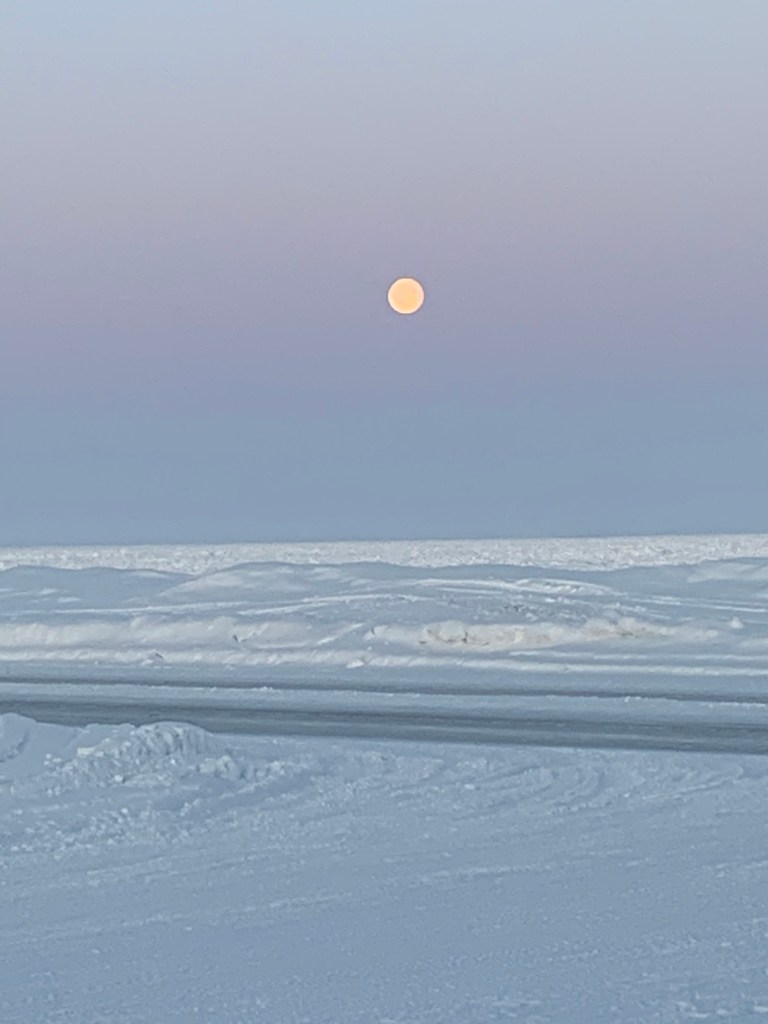
Once we finished looking around on the ice we returned to the Nest and hung around for awhile until it was time for dinner. Throughout most of the week we had dinner at the Ilisagvik College cafeteria, but on this first night we went out into town and had dinner at a local restaurant. The place we chose to go was called Northern Lights. The restaurant had just about everything you would find at a restaurant anywhere else in the United States. One thing I found interesting about Barrow’s restaurants specifically is that most of them seem to much more variety than places I’m used to in Radford. For example, the Japanese restaurant in Barrow also had a Mexican-style hamburger, and the Korean place had Italian food options. Maybe that’s entirely abnormal and I’m just unaware, but I thought it was interesting. At Northern Lights I got a bowl of sticky rice and an order of curly fries – a true college student dinner. The food was actually very good and refreshing after a day of basically no food during travel. One important detail to note about Barrow is the price of living. Everything is very expensive in Barrow – much more expensive than equivalent products would cost in the lower 48 and even the rest of Alaska. My small dinner/snack cost $14. Something similar in Radford would probably cost $6-$8. In the entries for days later in the week I’ll talk about my experience at the local grocery store and I think that will put into more perspective the cost differences between Barrow and other places. The dinner at Northern Lights was a very enjoyable time. That night was one of only two nights that the entire group (everyone) that took part in the trip was in Barrow together. There were many laughs and good times at the dinner and for the rest of the time that we were all together. It was very fun and made my transition from “normal” life to my week long stay in Barrow a very easy one. That night was definitely a highlight of the trip for me.
We returned from dinner relatively early and began what would become the nightly tradition of playing card games in the kitchen/lounge area. For several hours we played a variety of card games like Lucky Monkey and Go Fish. It was a great time and I loved it. A few of our group had downloaded an app that tracks the Aurora and gives a percent chance of seeing it at any given time, so we kept a close eye on that all night. Lo and behold, we actually got to see the Aurora around 2 am. It was actually the only night of the entire week that I got to see it. Let me say, the Aurora is absolutely insane. Pictures really do not do it justice. It spanned the entire sky – from horizon to horizon. We stayed outside for quite some time taking pictures and marveling in one of Earth’s most beautiful events. It was a wonderful moment. At this point, I have crossed into Sunday, but all of this happened without any sleep breaks, so it felt like an event of Saturday to me. We all went to bed around 2:30 am and slept for just a few hours before starting off Sunday around 7:30 am.

Sunday, March 8:
After a short nap for about five hours, I got up and made my way to the kitchen for breakfast. I have a lot of food allergies, so I brought a container in my suitcase that had some foods that I know I can safely eat, including cereal. My favorite is Apple Cinnamon Cheerios, so I had that every morning for breakfast. I found it very easy to get up “early” in Alaska since their time is four hours behind east coast time. When I got up in Barrow at 7:30 am it was like I was getting up at 11:30 am on the east coast. Luckily, this time difference worked in my favor and the adjustment was easy. After waking up and eating, we all gathered in the central mudroom type area at the entrance to the Nest and got our gear on in preparation for my first true day on the ice doing research. It was very cold on Sunday, about -30 F with wind chill. Thankfully, I hit the winter gear lottery and had a jacket that had been worn in the North Pole. Needless to say, this thing was very warm. In fact, most days that we went out on the ice, I was getting hot. Hot enough that I sometimes took my jacket off even though it was pretty consistently in the -20s. We again walked over to the Theater and got ready for the morning ice session. On Sunday we focused on Annie’s project and Alex’s project. Annie was using a sensor that monitored the temperature of the ice. She was hoping monitor the surface temperature of the ice without sun exposure over a period of time in hopes of capturing a heat decay from the ice. Alex was looking at wind speeds using anemometers at various heights above the ice. One interesting thing about wind close to the ground is that there can be a significant difference between wind speed very close to the ground and further away from it due to friction – a so-called “friction layer.” Alex hoped to see this friction layer in action by measuring wind speed over the ice in flat areas far away from obstructions in the surface architecture. In addition, Hunter brought out his project – something he mostly independently did every time we went out on the ice. Hunter was using geophones – devices that monitor waves traveling through the ground like those created by earthquakes – in hopes to capture ice fracturing and other large scale structural movements in the ice. He set out his boxes far away from our working area on the ice nearly every time we went out over the week.
After preparations in the Theater, we headed out onto the ice for a nice morning doing research in one of the world’s coolest places (no pun intended). We first set out Annie’s device. I was the designated sweeper/sun blocker for some time while we worked on her project. Since snow covered the ice, it had to be swept away in order to monitor the ice and not the snow. Additionally, her sensor needed to be shielded from the Sun in to avoid changes in temperature from its radiation. So for awhile I stood and did a great job blocking the Sun! Deanna and Annie meanwhile collected shards of ice and stacked them to create a shield from the Sun. Once Annie was satisfied with the setup, we moved on to Alex’s project and began working on getting his up and running. Alex’s setup consisted of a large tripod maybe seven tall that held two pieces of wood and another large pole that fit between the wood pieces. On the pole were five anemometers roughly equidistant from each other. With some help from the rest of the group, we got his device constructed on the ice and he got it collecting data. At one point, the wind actually knocked over his devices and one of the anemometers unfortunate broke. Luckily, he still had four more operating anemometers so his device was not lost. We waited awhile as Alex and Annie’s separate devices collected data and then made our way back to the Theater and ultimately back to the Nest for lunch.
I made gluten-free pasta for lunch using a gas oven. I had never actually used a gas oven before, so I got to learn something new! Learning new things is great, so I enjoyed that. Lunch was a nice break. We played some cards and hung out for some time before we got ready to head back out on the ice for an afternoon session. The afternoon session was very similar to the morning session. Alex and Annie slightly modified their approach to data collection based on the way the morning session went and then collected some more data. I again served as a helping hand during that session and tried to help out where I was useful. Around 4:45 pm or so we headed back inside and got ready for dinner. Sometime before dinner Dr. Herman and I headed over to the college cafeteria and spoke with Chris, the chef at the college. I explained to him my various dietary restrictions and was very happy that he was so accommodating to my restrictions. Food has always been a source of anxiety for me because I have many severe allergies that have put in the hospital before. As a result, travel is not something that I normally do. I was relieved and grateful that Chris was understanding and made the perfect accommodations for my needs. Eventually we all gathered as a group and got dinner at the college cafeteria. I was surprised at how good the food was. It was actually really good – not something I would necessarily expect from a cafeteria-style place. Chris is a very good chef. We sat around for awhile eating and talking. We later returned to the Nest and spent another evening playing games and having fun. I went to earlier on this night since the chances for the Aurora were pretty low. I also really needed the sleep – traveling is an exhausting experience.
Monday, March 9:
Monday was in general very similar to Sunday. At this point, the group from the previous week had left Barrow and our numbers decreased by three. On Monday we again had a morning session and an afternoon session. I remember primarily working on Alex’s project. We first started working on my project on Tuesday. One thing I’ll say that isn’t specific to Monday but rather a general comment is this: it is extremely dry in Barrow. It is without a doubt the driest place I have ever visited. A few people got bloody noses just from existing. I know I would frequently have blood in my mucus from sneezing (sorry if that’s gross, I’m trying to convey the full experience!). Something very weird we noticed relates to sweating and condensation on cups. In Virginia (and most places, I assume), if you get sweaty, the perspiration sticks to you for awhile before drying. In Barrow, I noticed that even if I got really sweaty working on the ice, it dried up nearly instantly when we went inside. I never got that clammy post-workout feeling that you normally get from exercising. I was always completely dry, even if I felt like I was getting really sweaty. Additionally, cups do not form condensation on the outside at all in Barrow. It’s so weird to drink a cold drink and not have any condensation on it. It’s just so dry up there that it all evaporates before it really has a chance to accumulate. It was some weird stuff. Some of the small things like that that made the trip such an experience. On Monday we ate dinner at the college again and continued our nightly ritual of playing cards – only with fewer people this time.
Tuesday, March 10:
Tuesday was a cold one. A very cold one. It was the second coldest day of the week for our group. With wind chill, the temperature reached a low of -58 F. My coat made the temperature bearable, but my face definitely felt the cold in all of its glory. Another small thing that was crazy to experience is all of the places that little icicles can form in and on your face. Breathing air that cold almost instantly freezes the hairs in your nose and it’s a really weird feeling. The air is so cold that it makes your eyelashes stick together when you blink, so sometime I had to use my fingers to move them apart so my eye would open normally. I also have asthma and cold air has always triggered my asthma. For the first few days I got a tight chest nearly every time I took a breath of the air in Barrow. Overall, just a quick trip outside had all sorts of weird things associated with it. Tuesday was the first day that I got to test my device. During the beginning of the morning session I helped Alex with his project and walked around with Hunter to place his boxes. Once their stuff was set we got the ice corer constructed that the drilling company Kovaks let us borrow and I learned how to use the corer for the first time. The corer was a really cool piece of equipment. It attached to a drill using a specialized drill bit and had attachments like an extender so that we could reach deep within the ice. Barrow actually had a very warm winter in late 2019 and the coldest January on record in 2020, so the ice froze in a very sudden fashion. The results of this quick freezing were a very messy looking and thick sheet of ice over the ocean. To me, it looked like the ocean sort of flash froze. The best way I can describe it is to imagine that “normal” liquid ocean flash froze and maintained all the of the features that the water had – its uneven surface and wave crests and troughs. Anyway, the ice was very thick – up to two meters in some places – so that extender was a necessity for our work. I used the corer to retrieve an ice core and with the help of Hunter and Alex I began to take my first set of data.
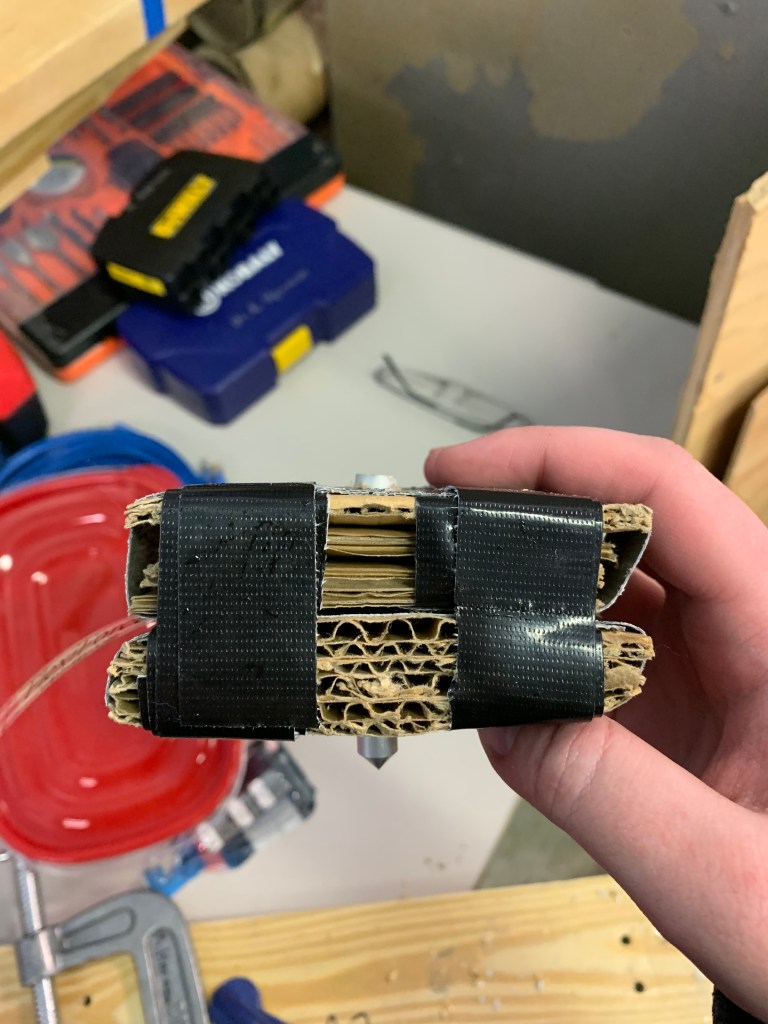
I’ll now describe in more detail the specific design aspects and purpose of my project. To state it simply, I made a durometer – a device used to test the hardness of materials by applying pressure to its surface. I used an Arduino micro-controller, a rechargeable lithium battery, and an OpenLog chip to write my data to an SD card. I worked with Dr. Herman to code the Arduino to collect voltage readings over time and convert them in pressure readings using a calibration curve that I created. By using a specialized sensor called a force sensitive resistor, I changed the sensor’s resistance by applying force through the use of a hammer which in turn gave different voltage readings. My calibration curve equation converted the voltage readings into pressure readings. By using pieces of aluminum that were in constant contact across the surface of the sensor, I used the hammer to create small indentations in the surface of the ice. By taking the combined data of pressures from the SD card and the diameter of the indentations I created, I produced a number on a hardness scale called the Vickers Hardness Scale (HV). My ultimate goal is to convert these Vickers numbers in approximations on the Mohs Hardness Scale – the scale used to classify minerals by their hardness. My initial thoguhts were that the ice would have a greater hardness at the bottom because it is further from the Sun, but my results revealed something different. I have yet to do a full analysis of my data, but my initial analysis revealed a fairly clear result – the ice is harder at the top and progressively becomes less hard towards the bottom where it meets the ocean water. After some discussion, it became clear why the data is the way it is. The warmest part of the ice is actually at the very bottom. The ocean water at the bottom is significantly warmer than the air temperature even though it is still very cold. Since the water is so much warmer than the air, the ice at the bottom is very easy to break. It is almost like a slushie that is frozen but very loosely. The first ten inches or so of ice were very easy to break, but the ice at the top was as hard as a rock (in this case I’m using “hard” as an adjective; I don’t actually know yet if the ice’s hardness is comparable to that of rocks). As part of my preparation for the trip in Radford, I designed and went through several versions of a 3D-printed box that I was going to use to house the force sensitive resistor and the aluminum pieces I used to create the indentations. Once out in the field I realized that although I was proud of the box and went through a lot of trial and error to get it in my hands, it was difficult to work with in the cold weather and really just got in the way. I tried super gluing the aluminum pieces to the sensor to make testing easier. The super glue worked to hold the pieces, but it was a disaster once I started hammering the pieces. Because it was so cold, the glue and the sensor did not agree with each other. After about four hits, the plastic sensor started to split. As I continued testing along the length of the ice core, the splitting only got worse until it was ultimately destroyed by the end. Thankfully, we had a spare sensor. However, I had some work to do to figure out an alternate method of testing that didn’t destroy the sensor in five minutes. Dr. Herman suggested using pieces of cardboard to hold the aluminum pieces steady in place with the sensor sandwiched between. This setup had several advantages. Firstly, it was infinitely easier to manipulate and hold in the field. The gloves I was wear did not lend themselves to the precise manipulation of small objects. The cardboard setup I made was large and easy to hold. The cardboard was also easily moveable. The box that I printed required a lot of manipulation to adjust – something we really didn’t have time for or the ability to do without freezing out on the ice. I tested my device again on Thursday with the new cardboard setup and it went much more smoothly. The sensor didn’t break and I was able to get data with taking my gloves off like I had to on Tuesday.

Once we finished on the ice for the day we headed back inside and the day was very similar to the other days. We had dinner at the college and played some games. Again, it was very fun.
Wednesday, March 11:
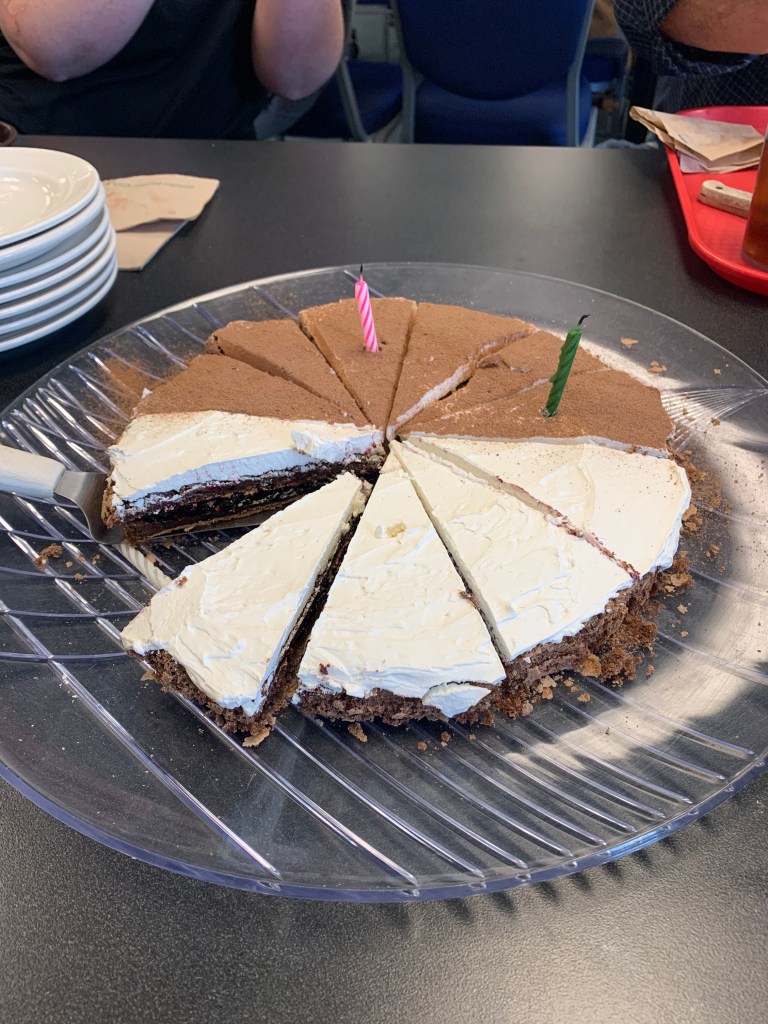
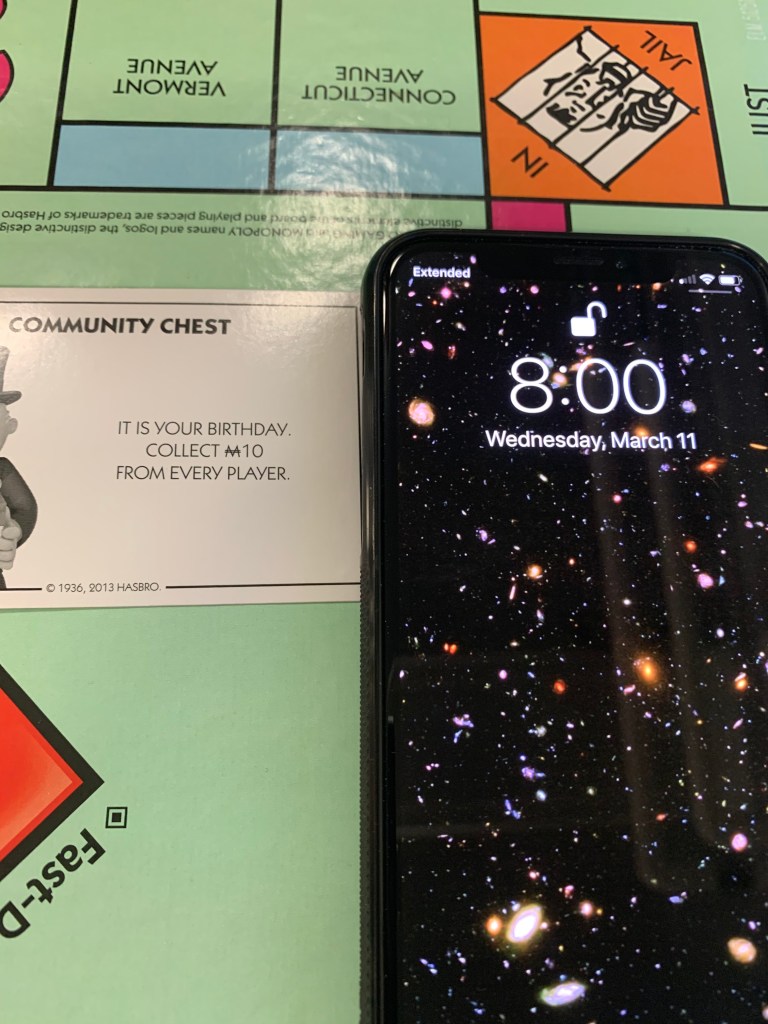
My birthday! Yeah, that’s right; I had my birthday in Barrow. It was certainly a memorable birthday – one that I won’t forget. I turned 22. I woke up at 7:30 am like usual and made my way to the kitchen for breakfast. On the table where I usually sat was a card labeled “WILL!!!” Inside the card were notes from everyone on the trip. It was a very nice thing and made me very happy. I was with a great group and the card made that very apparent. We didn’t actually go on the ice on birthday. Instead, we headed into town for a visit at the Inupiat Heritage Center. The Heritage Center is a museum that has exhibits on various pieces of Barrow’s history and Native Alaskan culture. The main exhibit displayed whaling and its importance culturally and economically in Barrow. It was very interesting to see some of the details of a culture that I truly did not know anything about until I came to Barrow. I also stopped by the gift shop and got some goodies to take back home. It was a fun place to spend the morning. After coming home from the Heritage Center, I remember taking a much needed nap. I made sure to go to bed at a reasonable time every night (except for the first night), but it took me awhile to stop feeling tired every day. I woke up around dinner time and we headed over to the college cafeteria. Dinner that night wasn’t much different than it had been previously, but at the end there was a huge surprise – a cake! A cake that I could actually eat! I guess that Dr. Herman or Christina had been in contact with Chris about my birthday and he made one for me. I think it is one of the nicest things anybody has done for me before. And let me just say, as someone that can’t eat a lot of things, this cake was absolutely amazing. A lot of foods – especially desserts – became impossible for me to eat once I had to stop eating wheat, and a lot of the substitute desserts that are gluten-free aren’t quite the same as the real thing. This cake, however, was different. It really was one of the best cakes I have ever had (including all of the gluten containing “normal” cakes I have had in the past). I might describe it as more of a pie with icing, but either way it was amazing. Not only did it taste great, but it meant a lot to me that Chris did that for me and that whoever helped plan it planned it. Again, these people are great. It made my birthday very special. Once we returned to the Nest we discovered a Monopoly game set in one of the lounges and it actually had everything with it! Now we had a new game to play, and we played it a lot. That night, Hunter and I played Monopoly and I got absolutely destroyed, but it was a good time. Funny note: I got the community chest card that reads “It is your birthday! Collect $10.”, and it was actually my birthday. Good timing, game.
Thursday, March 12:
On Thursday things took a bit of a different turn. The weather started to change and eventually a blizzard rolled in and made access to the ice impossible for us. Luckily, we got to spend a little bit of time out on the ice in the morning, but as soon as lunch rolled around we had to go in. That morning on the ice was probably the coldest I’ve ever been in my life. The wind was about 20-30 mph at the time and the air temperature was already -20 F. It was so cold outside I can’t really describe it. It was just painful to be outside. Alas, I got to use my device again and got another set of data. My preliminary analysis showed me that it again followed the trend that the ice’s hardness decreases with depth. We also got to test Deanna’s device for the first and only time. She was using a pressure sensor to monitor the pressure of the water under the ice with hopes of using that information to learn about the water currents. In order to get her device in the water we had to drill multiple holes in the ice since the holes immediately filled with water as soon as the core was removed. As a team, we made a hole in the ice big enough that it didn’t fill up with water immediately and she was able to get data. After we both finished up we very quickly headed inside and prepared for the blizzard by going to the grocery store again.
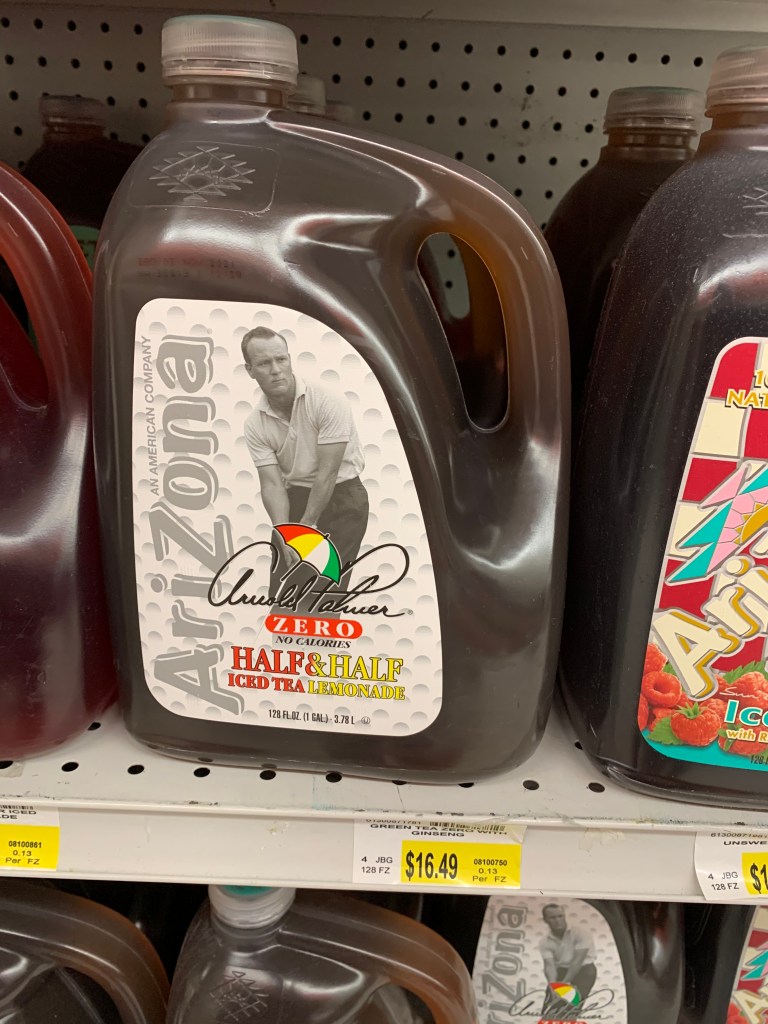
The grocery store in Barrow was very interesting. It is called Stuaqpak. That means “store” in the language that some of the natives speak. I was expecting the store to not have very much since Barrow is fairly small and it is literally on the edge of the world, but I was once again very surprised (this place is full of surprises). Stauqpak was a mix of Walmart, Food Lion, and Kroger. It had basically everything you could need or want in a grocery store. The prices were absolutely insane, but they had everything. We made a quick grocery run and got back to the Nest before the people responsible for clearing the roads of snow stopped clearing it for the blizzard. For the next day and a half we were completely stuck in Nest and couldn’t leave to go anywhere, even the college. As you might expect, we didn’t do anything for the rest of Thursday night and all of Friday. I spent some time looking at my data, playing games, sleeping, and catching up on Westworld. Nothing very eventful happened on those days, but I did get to take videos and pictures of what a true blizzard looks like!
Saturday, March 14 and Sunday, March 15:
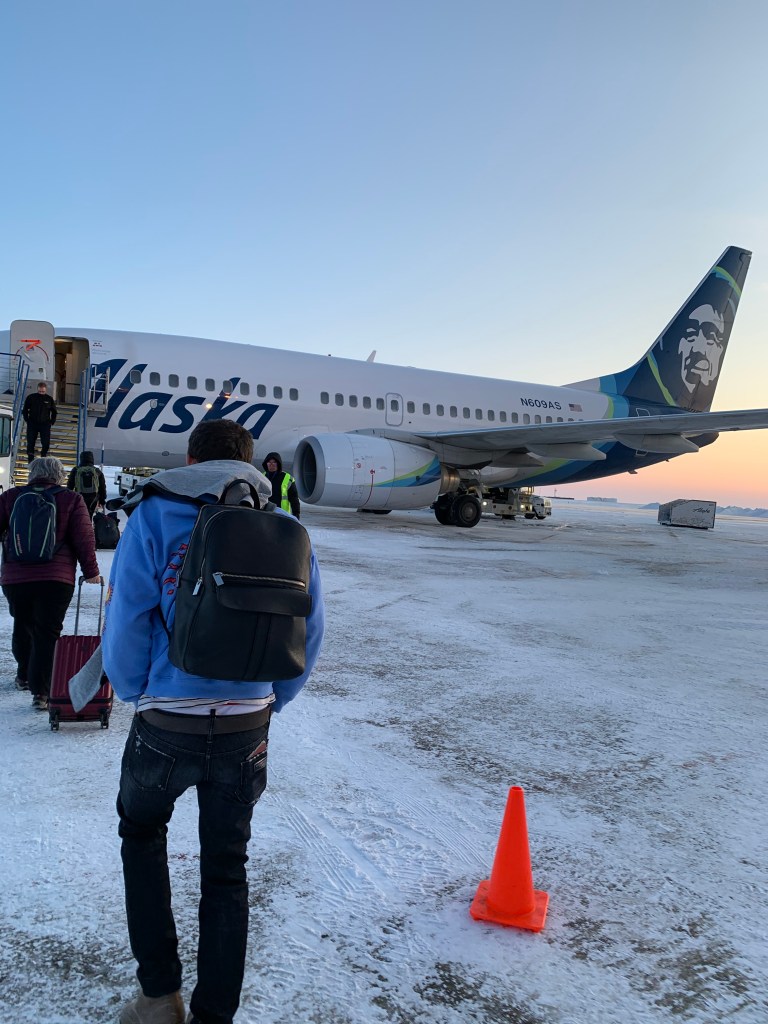
These two days were filled with mostly travel. We spent the morning of Saturday packing up all of our equipment and gear in preparation for our departure from Barrow at 7:30 pm. The flight back was a long one. I was extremely tired in the end but happy to be back on the east coast, especially with all of the mess with the coronavirus kicking up. While we were in Barrow, a lot of stuff happened with the virus. I probably don’t need to tell you what, because you’ve most likely heard nothing other than coronavirus news for the past few days. It is definitely an interesting time to be alive. I finally made it back to Dulles a little before midnight on Sunday evening. I got back to my house in Radford just about a day ago and I’ve been trying to adjust back to east coast time a bit unsuccessfully.
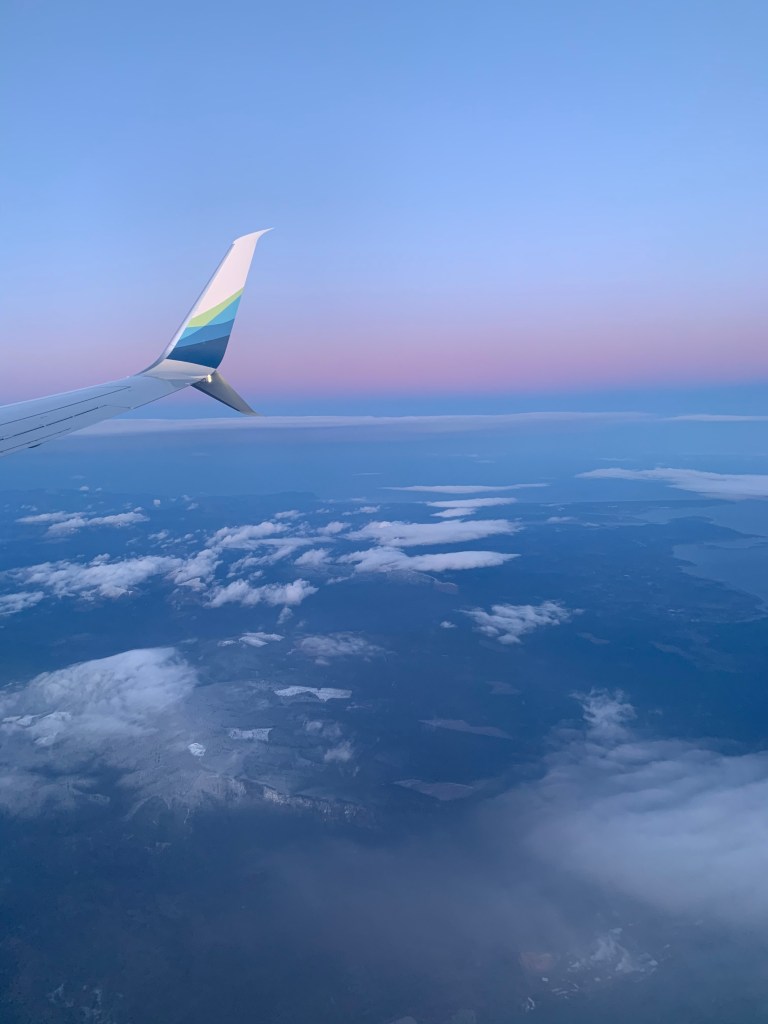
This trip was without a doubt one of the greatest experiences I’ve ever had. I know I won’t forget it. I learned a lot about how to do research on my own and how to persevere through obstacles. I’d like to give a huge thank you to everyone that helped make this journey possible for me: my parents, Dr. Herman, Radford University, and every new friend I made during this awesome trip. This trip and the experience I got from it would not have been possible without the help and support of these people. I am very grateful for the opportunity I was given and I hope that I will be able to visit Barrow again someday. It truly was a blast.
 Will's blog